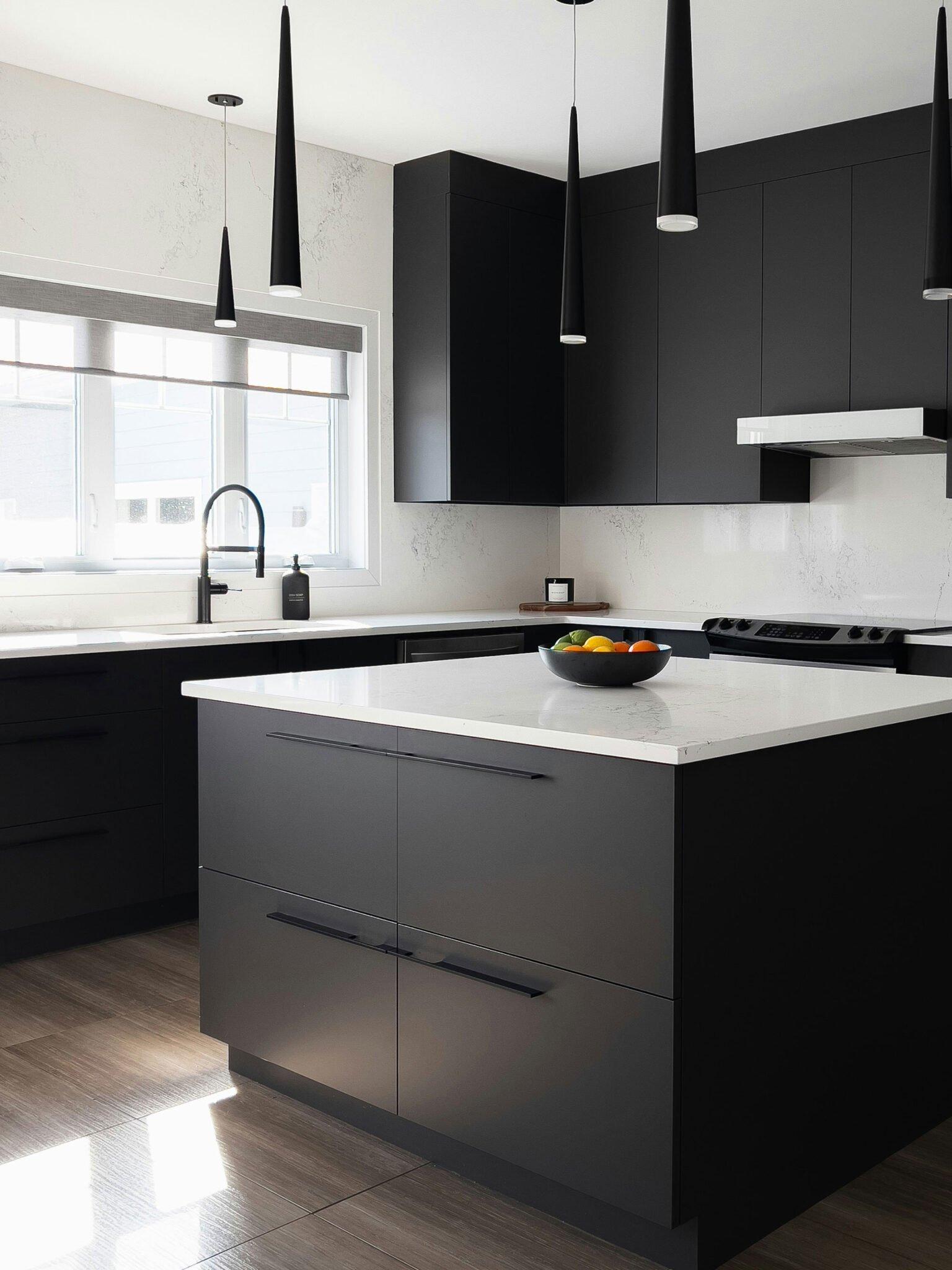
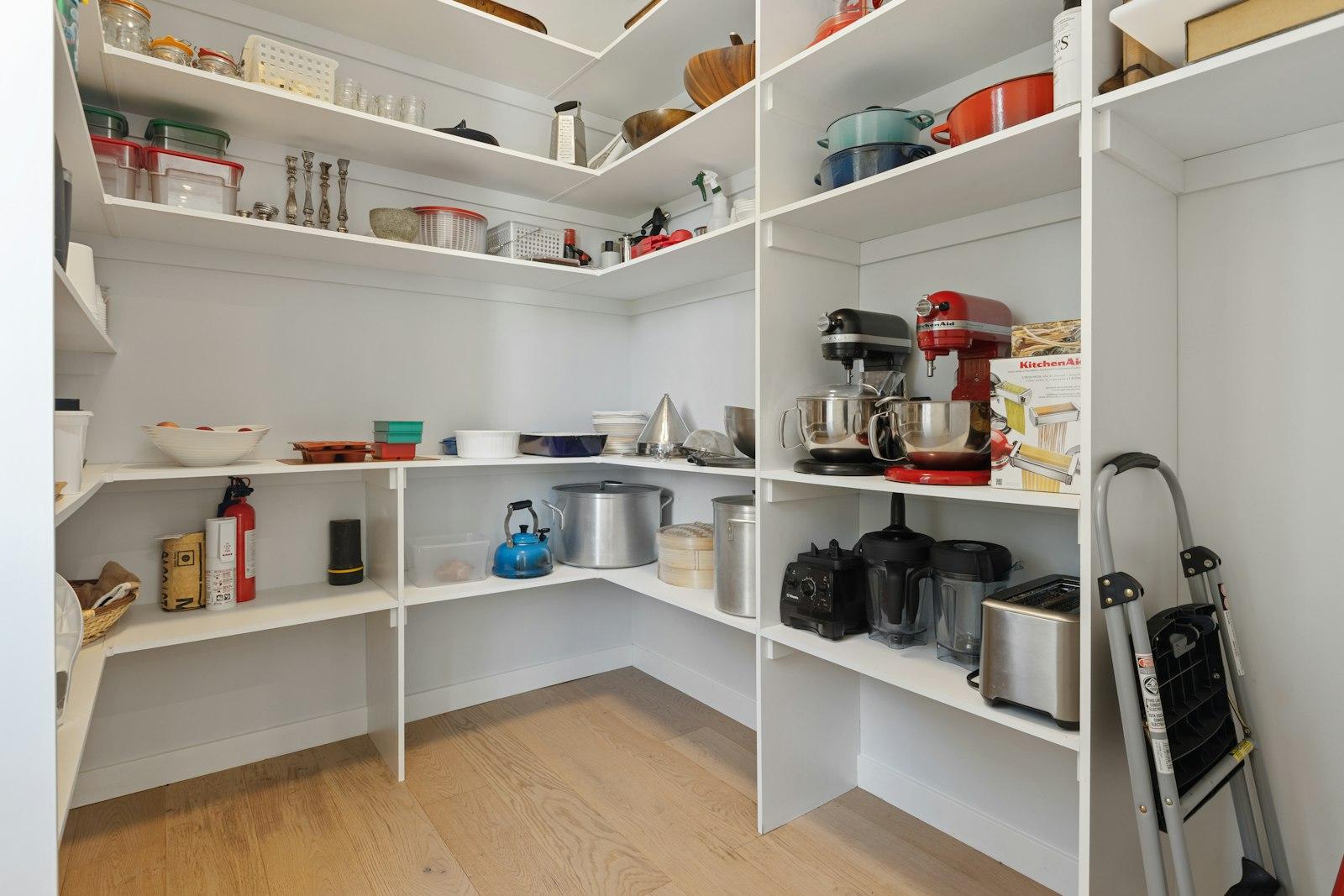
Scullery shelving & storage ideas
Open shelves, cupboards or drawers — plus the shelf depths, spacing and bench-to-shelf heights that fit NZ appliance sizes, and the mistakes to avoid.
Book a free design consultGood scullery storage isn't about cramming in as many shelves as possible — it's about sizing them to what you actually keep and keeping the working bench usable. Get the depths, the spacing and the bench-to-shelf height right and a small scullery holds far more than you'd expect. Here is how we plan it.
Open shelves vs cupboards vs drawers
Each does a different job, and most good sculleries use all three:
- Open shelving is cost-effective, keeps everyday jars and crockery in reach, and makes a tight room feel lighter — but it shows clutter and collects dust and grease. Best up high, for things you use often.
- Cupboards hide the mess and protect contents, which matters if the scullery door is ever left open to the main kitchen. Good for less-used and bulkier gear.
- Drawers are the best storage of all for weight and access — deep pot drawers below the bench beat a low cupboard you have to crouch into every time.
Shelf depths for NZ appliance sizes
Around 300mm deep is the sweet spot for dry goods, crockery and small appliances — everything stays visible and nothing gets lost at the back. Step up to 400mm only where you store larger gear like a stand mixer or slow cooker. The pantry wall of a scullery can run the full 600mm bench depth for tall cabinets. The one rule we hold to: no open shelf deeper than 400mm, or the back becomes a graveyard.
Spacing and bench-to-shelf height
Space shelves to their contents, not evenly for looks. Allow roughly 250–300mm between shelves for everyday crockery and jars, 350–400mm for tall bottles and small appliances, and leave one taller gap for the kettle, toaster or mixer. Above the working bench, keep 450–500mm clear to the first shelf so you can use an appliance without knocking it. Make the shelves adjustable and you can retune all of it as your needs change.
Don't forget the power
The most useful shelf in a scullery is the one with power beside it. Plan a generous run of double points along the appliance bench (around 150mm above the benchtop) so the kettle, toaster, microwave and coffee machine all have a permanent home and never migrate back to the main kitchen. A beautiful run of shelving with nowhere to plug in is the mistake we see most.
Mistakes to avoid
- Shelves too deep, so everything vanishes at the back.
- Fixed spacing that doesn't fit the things you own.
- Open shelving only — the clutter is then always on show.
- No power points, so the appliance bench can't be used.
- No lighting, so the shelves sit in shadow under the cabinets.
We build the shelving and cabinetry to your appliances and your habits in our own Rotorua factory, with CNC precision so the adjustable runs line up and hold true. You'll see it in 3D and get a fixed written quote before anything is cut.
Frequently asked questions
Open shelving or cupboards in a scullery?
How deep should scullery shelves be?
How far apart should scullery shelves be?
How high should the first shelf sit above the bench?
What are the most common scullery storage mistakes?
Contact us to transform your kitchen experience
Kitchen Beyond is where your dream kitchen becomes reality — expert planning, quality craftsmanship and a seamless install, all from our own Rotorua factory.