Scullery & pantry doors
The door decides whether a scullery works — cavity slider, hinged, pocket, open doorway or full-height hidden door. Clearances, glass vs solid, and the cost of each.
Book a free design consultThe door is the detail that makes or breaks a scullery. Choose wrong and a swinging door eats the floor you just built, or an open doorway leaves the mess on show from the dining table. Choose right and the scullery closes off cleanly when you want it to and disappears when you don't. Here are the five options, with the clearances and costs that separate them.
Cavity slider (pocket door)
Our most-recommended option for NZ homes. The door slides into a cavity inside the wall, so no swing steals floor space and the opening sits clean and flush when it's open. It needs a clear stud cavity beside the opening to house the panel, so it suits a new build or a renovation where that wall is being opened up anyway. Mid-range on cost: you pay for the slider hardware and the cavity.
Hinged door
The simplest to fit and the easiest to retrofit, since it needs no wall cavity. The trade-off is the swing — a hinged door needs around 800–900mm of clear floor to open into, which in a small scullery can clash with the fridge or an appliance bench. Works best where the door opens into the main kitchen rather than into the scullery itself. Lower cost than a slider.
Open doorway
No door at all — just a clean opening through to the scullery. It is the cheapest option, keeps the space feeling connected and bright, and is ideal when the scullery is tucked around a corner where the mess isn't visible from the living areas. The catch is obvious: nothing hides the back kitchen when guests are over, so it suits a scullery you keep genuinely tidy.
Full-height hidden door
The most seamless option: a handleless, push-to-open front with the same fronts as the surrounding cabinetry, so the entrance reads as more kitchen until you open it. It is the signature move of a hidden scullery and the one that needs the most precise joinery — the fronts, the grain and the reveals all have to line up exactly. The dearest of the five, because you're paying for the concealment.
Glass vs solid
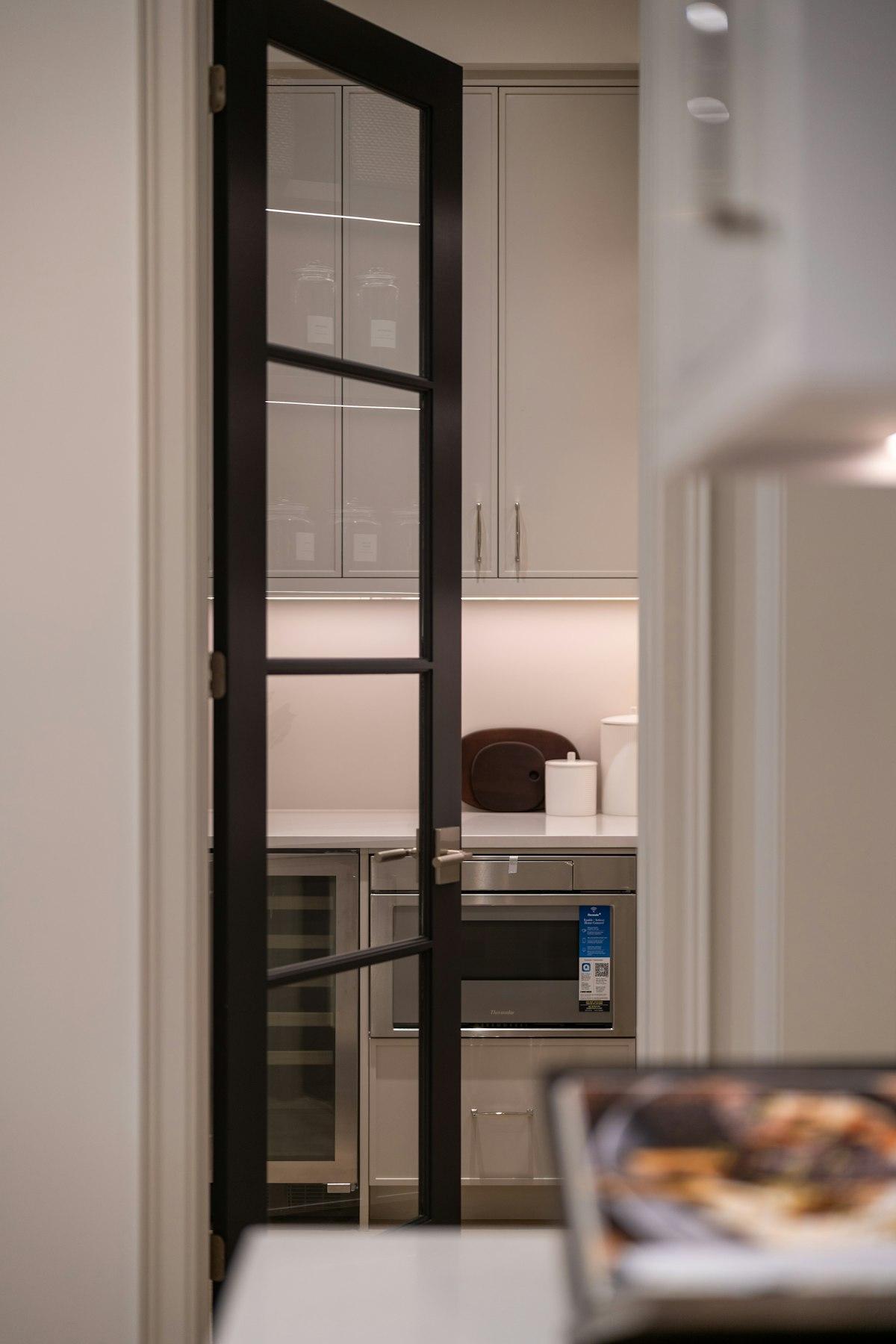
Solid doors hide the contents completely and blend into the cabinetry — usually what you want for a working scullery. Glass, especially frosted or reeded glass, passes light into a dark back kitchen and keeps the space feeling open while blurring the clutter behind it. Reeded or frosted glass is the middle ground we reach for most: light through, mess softened.
Getting the clearances right
Whichever you choose, leave at least 800–900mm of clear opening so you can walk through with a full tray or basket. For a cavity slider, keep the wall beside the opening free for the panel; for a hinged door, plan the swing so it doesn't foul an appliance. We work the door into the plan from the start — and build it, and the cabinetry around it, in our own Rotorua factory — so it opens the way it should. You'll get a fixed written quote with your chosen option priced in before work starts.
Frequently asked questions
What is the best door for a scullery or pantry?
How wide should a scullery or pantry doorway be?
Should a pantry door be glass or solid?
What is the difference between a cavity slider and a pocket door?
How much do scullery doors add to the cost?
Contact us to transform your kitchen experience
Kitchen Beyond is where your dream kitchen becomes reality — expert planning, quality craftsmanship and a seamless install, all from our own Rotorua factory.