
Engineered stone benchtops: cost & pros and cons
The most popular benchtop in New Zealand kitchens — here’s what engineered stone costs, how it performs, how to care for it, and the safety facts you should know.
Book a free design consultEngineered stone benchtops — quartz composites like Caesarstone — are made from crushed stone bound with resin. They give you the look of natural stone with a harder, non-porous, low-maintenance surface. In NZ you’ll pay roughly $500–$1,000+ per square metre installed. They resist scratches and stains brilliantly but aren’t heat-proof, and fabrication must follow strict silica-dust rules.
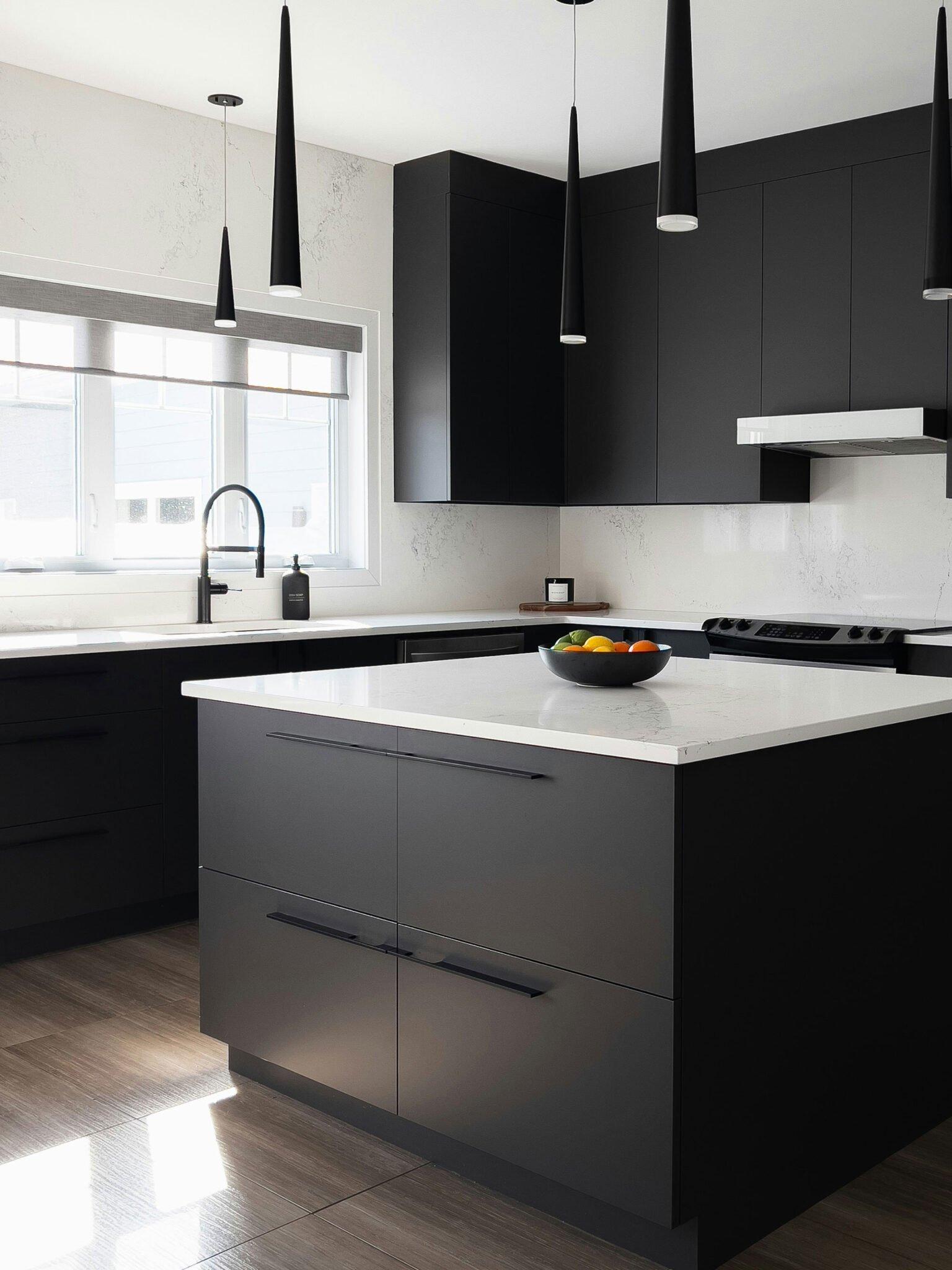
Stone looks, everyday toughness
Engineered stone hits the sweet spot for most families. It looks like marble or granite, but the resin binder makes it harder, non-porous and far more consistent in colour from slab to slab — so what you choose is what you get.
Because it never needs sealing and wipes clean with soapy water, it’s genuinely low-maintenance. We fit it on the majority of the kitchens we build in our own Rotorua factory, and it’s available in everything from crisp whites to deep, dramatic veining.
The pros
Hard-wearing and scratch resistant for day-to-day use. Non-porous, so it never needs sealing and strongly resists stains and bacteria. Consistent colour and pattern across the whole benchtop. A huge range of colours and finishes, including matte and textured. And it holds its value, adding real appeal when you sell.
The cons
It isn’t heat-proof — a hot pot straight from the stove can scorch the resin or thermally shock the slab, so always use a trivet. It’s heavier and pricier than laminate, and the realistic veining of natural marble is still subtly different up close. Dark, high-gloss colours can show fingerprints and fine scratches more than textured finishes.
What it costs in NZ
Supplied and installed, budget roughly $500–$1,000+ per square metre. Entry-level plain colours sit at the lower end; thicker slabs (40mm), premium veined designs, mitred waterfall ends and fancy edge profiles push it up. A standard L-shaped kitchen bench with an island will usually land somewhere in the middle of that range. We give you an exact figure in your written quote.
Caring for engineered stone
Clean with warm soapy water or a pH-neutral spray and a soft cloth. Avoid abrasive pads and harsh or highly alkaline cleaners, which can dull the surface over time. Wipe spills promptly, never cut directly on the stone, and always use a trivet under hot pots and appliances. Done simply, it will look excellent for decades.
Silica & safety — the NZ situation
You may have heard engineered stone was banned in Australia. That ban addresses silicosis — a serious lung disease caused by breathing in the fine silica dust released when the stone is cut and ground. New Zealand has not banned the product; instead WorkSafe NZ brought in tighter controls (from December 2024) for fabricators, requiring wet-cutting, dust extraction and proper respiratory protection.
For you as a homeowner this is reassuring: a finished, installed benchtop poses no silica risk at all — the hazard exists only during fabrication. We work with fabricators who follow the current WorkSafe requirements, so the people making your benchtop are protected too.
Frequently asked questions
How much do engineered stone benchtops cost in NZ?
Is engineered stone banned in New Zealand?
Can engineered stone be repaired if it chips or cracks?
Do engineered stone benchtops stain?
Contact us to transform your kitchen experience
Kitchen Beyond is where your dream kitchen becomes reality — expert planning, quality craftsmanship and a seamless install, all from our own Rotorua factory.