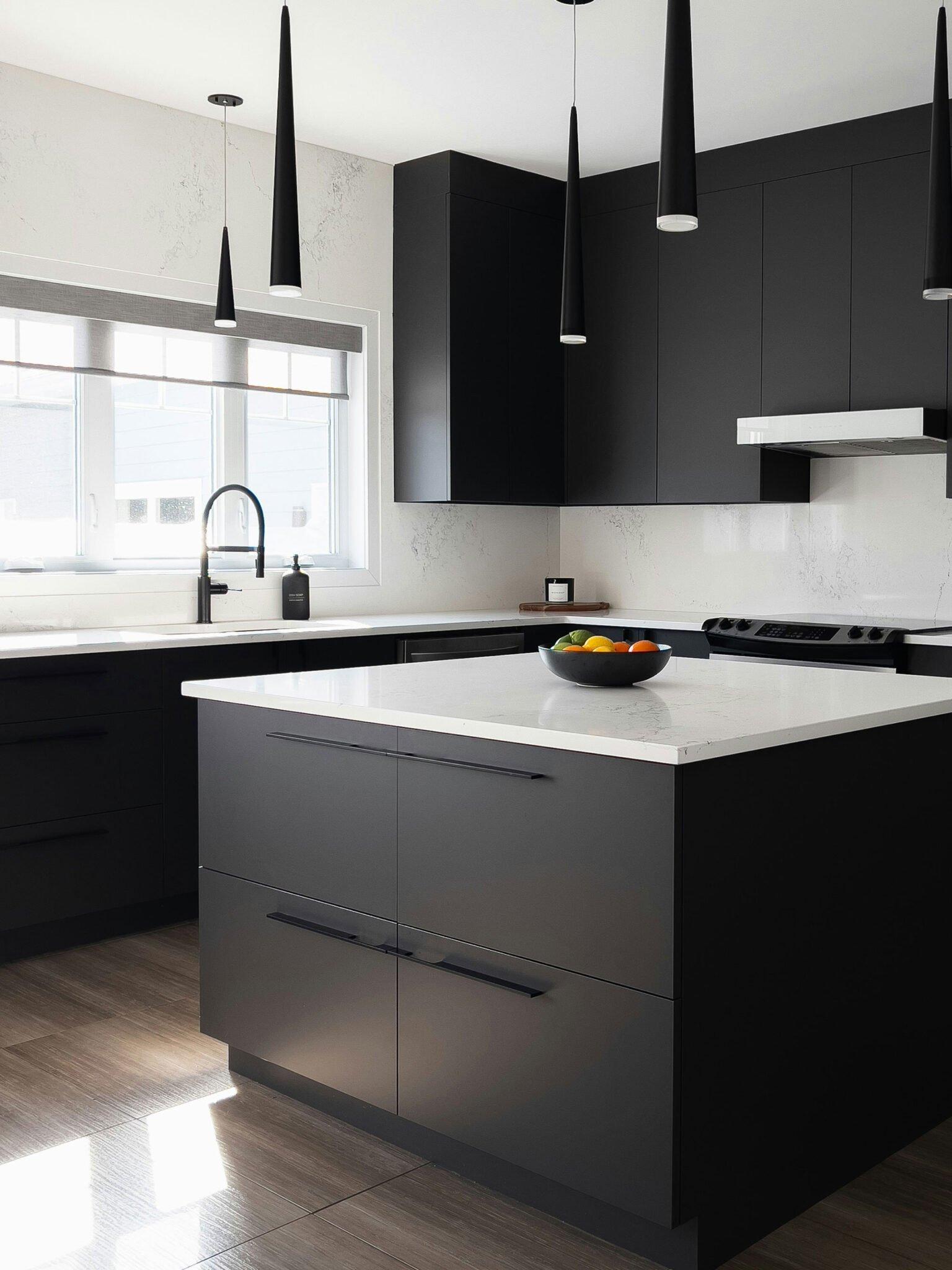

Bach kitchen ideas
Holiday homes earn their keep in short, busy bursts. Here's how to build a bach kitchen that feeds a full house, shrugs off hard wear, and locks up without a worry.
Get a free quoteA bach kitchen lives a different life to the one at home. It sits quiet for weeks, then a dozen people descend for a long weekend and it cooks three meals a day for a crowd with wet togs and sandy feet. The kitchens that cope are the simple, tough ones: hard-wearing surfaces, generous bench, and storage that swallows the gear a holiday house gathers. Here's how we build them around the Rotorua lakes and across the Waikato.
Build it to be hard-wearing
Everything in a bach kitchen takes a beating, so choose materials that give back. A quality laminate benchtop is warm, forgiving and cheap to replace if the worst happens — a sensible pick for a house that's used hard and left empty. Doors in a durable finish hide the odd knock, and soft-close hinges and runners stop drawers being slammed loose over a summer of enthusiastic kids. If you want to step up, engineered stone or porcelain both take heat and stains in their stride.
Bench to seat the whole family
The bach bench is where everyone ends up — prep, breakfast, cards, the works. Give it room. A longer run or an island with an overhang that seats six turns the kitchen into the heart of the house and keeps the cook in the conversation. Leave a clear landing bench beside the cooktop and the sink so three people can work at once without a collision.
Storage for a full house
- Deep drawers for the mismatched pots and the big summer platters.
- A dedicated spot for chilly bins, picnic gear and the barbecue tools.
- A tall pantry or pull-out for the dry goods a holiday house stockpiles.
- Open shelving or hooks for the mugs and glasses everyone reaches for.
- A compact scullery, where the footprint allows, to hide the mess when the house is full.
Lock-up-and-leave, worry-free
A bach spends more time empty than full, so the kitchen needs to be the kind you walk away from without a second thought. Sealed surfaces and finishes that don't mark easily mean no nasty surprises when you open up for the season. Fewer joins and a wipe-clean splashback cut the maintenance to almost nothing. Good ventilation and quality hardware keep damp and wear at bay through the off-season.
Coastal and lakeside wear
Water, damp air and the comings and goings of a holiday crowd are harder on a kitchen than you'd think. We specify hardware that holds up, finishes that resist moisture, and cabinetry built to our own CNC tolerances in our Rotorua factory so the joins stay tight for years. One team designs, manufactures and installs it, and you get a fixed written quote before any work starts — no drift, no surprises.
Keep the layout simple and open
A bach isn't the place for a complicated kitchen. The layouts that work hardest here are the honest ones — a single run, a galley, or an L-shape with an island — because they're efficient, cheaper per metre, and easy for anyone to use, including the guests who don't know where anything lives. Opening the kitchen to the living and dining space keeps the cook in the holiday rather than stuck at the bench, and makes a modest footprint feel generous when the house is full. Fewer corners and clever cabinetry also mean less to go wrong over the years.
Is a bach kitchen worth doing properly?
A holiday home is somewhere you want to actually relax, and nothing undoes that faster than a kitchen that fights you. Build it tough and simple once and it quietly does its job for decades. We'll measure up, show you the options in 3D, and build it to fit your custom kitchen exactly — whether it's a weekender by the lake or the family bach that's been in the family for years.
Frequently asked questions
What makes a good bach kitchen?
What benchtop is best for a bach?
How do I make a holiday-home kitchen low maintenance?
Can you fit a scullery into a bach?
Explore more
Planning a bach kitchen around the lakes?
Tell us how hard the place gets used and we'll design a kitchen that feeds the crowd, shrugs off the wear and locks up without a worry — built in our own Rotorua factory.